

The wrong belief most B2B marketers carry
Ask ten B2B marketers what a deal ID is, and you’ll get nine variations on the same answer: it’s how you buy premium publisher inventory programmatically. A way to get into the Wall Street Journal or The Economist without picking up the phone.
That answer was correct in 2017. In 2026 it’s so incomplete it’s actively misleading.
The deal ID has quietly become the single most important construct in modern B2B programmatic. Not because publishers have got more important, but because deal IDs are now the activation token for almost everything that matters: curated B2B audiences, first-party data overlays, supply-chain accountability, fee transparency, frequency capping at the account level, and the entire sell-side targeting movement that has reshaped how the open web works.
If you’re running B2B programmatic in 2026 and you can’t articulate what’s underneath every deal ID in your campaign, you don’t really know what you’re buying. That’s a hard sentence, but it’s the truth, and the rest of this piece is about why.
This is the first in a sixteen-week series unpacking the B2B programmatic stack, the way it’s actually operated by people who run it. Not the version vendors pitch.
What you’ll learn in this newsletter
Why the deal ID has quietly become the most important construct in modern B2B programmatic, and why most B2B marketers are still operating with a 2017 mental model of what it does - and missing out on what it can really do for them
A plain-English primer on how programmatic actually works, and why every glitzy new channel (CTV, audio, retail media, the imminent ChatGPT ad surface) runs through the same plumbing
The four canonical types of deal in programmatic (PG, Preferred, PMP, curated open auction), why the names confuse buyers, and how to tell which one you’re actually transacting on
Why curated deal IDs have structurally changed B2B targeting, and how Audigent, D&B, and the new wave of B2B-specific curators are rewriting the economics of the open web
The four operating patterns most B2B programmatic stacks fall into, and why pattern four is the only one that performs in 2026
Five questions to ask about any B2B deal ID that will surface most of what’s broken in a typical stack within an hour
First, the frame: what programmatic actually does (skip if you live in this stuff) and why the biggest vendors use it
If you run B2B marketing but don’t operate programmatic day to day, here’s the orientation you need before the rest of this piece makes sense.
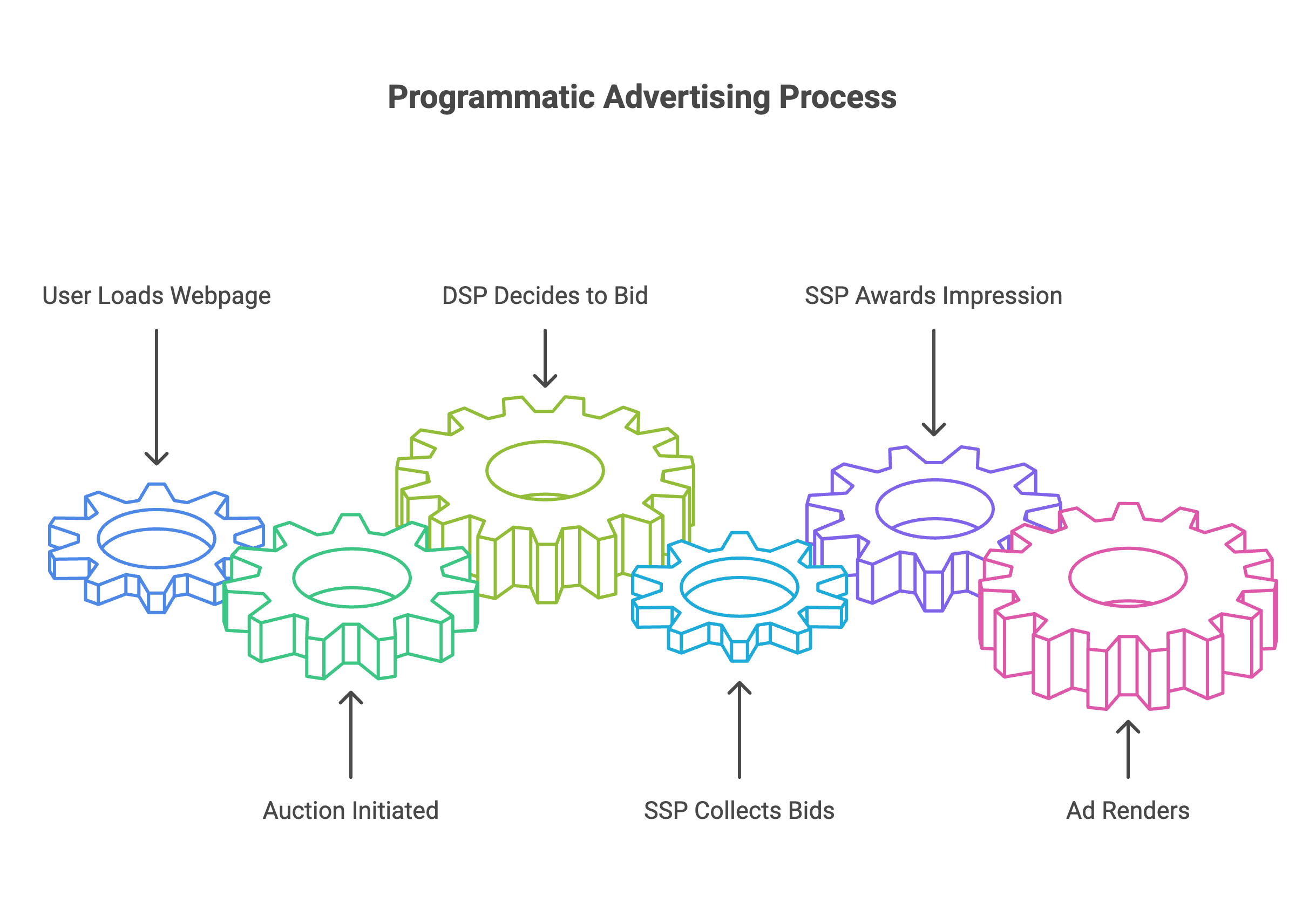
Programmatic advertising is automated media buying. Instead of an agency calling The Economist’s ad sales team to negotiate a banner placement, software does the buying in real time. When someone loads a webpage, opens a connected TV app, streams a podcast, or scrolls a news feed, an auction runs in the background. It takes about a hundred milliseconds. Your demand-side platform (DSP, the buying software) decides whether to bid for that impression based on who the user appears to be, what the content is, and what your campaign rules say. The supply-side platform (SSP, the publisher’s selling tool) collects the bids and awards the impression to the highest bidder. The ad renders. The user is none the wiser. Repeat around one trillion times a day.
This used to mean banner ads. It doesn’t anymore. Programmatic is now how almost every digital ad format gets bought: display, online video, native (in-feed sponsored content that looks editorial), connected TV (Netflix, Disney+, Paramount, the lot), digital audio (Spotify, podcast networks), and increasingly digital out-of-home (the screens at Canary Wharf and JFK). The flashy new channels everyone is excited about (CTV, audio, retail media networks, the imminent ChatGPT ad surface) all run on the same underlying plumbing. Different inventory, same auction mechanics, same DSP and SSP architecture, same supply-chain dynamics.
For B2B marketers, this matters more than for most. Your audiences are small. Your sales cycles are long. Your spend is scrutinised by a CFO who wants to know what every dollar did. Open auction (the default, hands-off way of buying programmatically) treats your budget the same way it treats a consumer brand running a back-to-school campaign: it tries to find scale at the lowest CPM. That’s not what B2B needs. B2B needs precision against a defined account list, supply-path discipline so fees don’t swallow the budget, and a way to apply your CRM data to a CTV campaign without giving away your customer list. In other words, the B2B use case starts stretching he technology capability behind programmatic, finding the edge cases and nuances and maxes them out. DealIDs are not that edge case, but in B2B we need them even more than our consumer focussed cousins
All of this is where deal IDs come in. They are the configurable control mechanism that turns programmatic from an auction running on autopilot into an activation framework you can actually steer. Without them, you’re shouting into the auction and hoping. With them, you’re operating the stack on purpose. Every premium B2B channel you might want to run (CTV against a target account list, podcast inventory against a buying committee, native placements in trade publications, contextual buys against intent-aligned content) is delivered through deal IDs. Knowing how they work is the difference between getting value from these channels and getting a slick post-campaign report that doesn’t translate into pipeline.
That’s the frame. Now the substance.
What a deal ID actually is, mechanically
Strip away the marketing layer and a deal ID is a string. Usually nineteen characters, generated by a supply-side platform (SSP) or ad server when a deal is set up, passed in the bid request from the SSP to demand-side platforms (DSPs), and recognised by the DSP as a signal to bid under pre-negotiated terms.
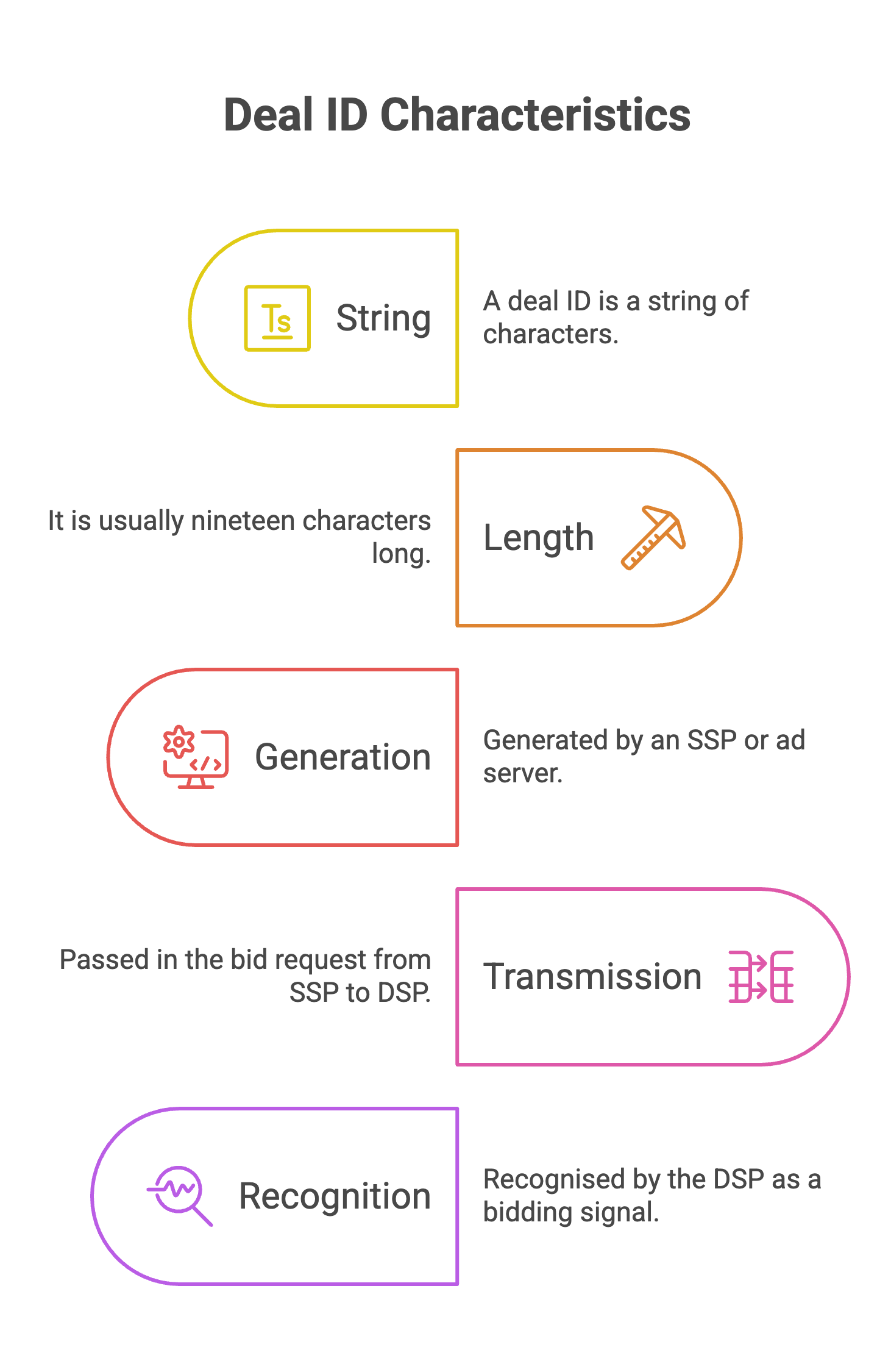
That’s it. A unique key that says: this impression has rules attached to it, here’s the rules, and here’s who’s allowed to bid.
Three things flow from that:
The deal ID is the carrier, not the cargo. It tells the DSP that special terms apply. The terms themselves (price floor, format, frequency, audience overlay, inventory list, payment treatment) sit in the deal record at the SSP. The DSP just needs to recognise the ID and apply the matching campaign logic. Often case Deals transfer a chunk of the targeting work off of the DSP, meaning your DSP fees typically come down (most contracts offer cheaper DSP take rates for DealID trading)
The deal ID is the unit of accountability. Because every impression purchased under a deal ID is auditable back to a specific set of terms, deal IDs are the only sane way to enforce supply-chain transparency at scale. Open auction buying, by comparison, is a black box where you trust the DSP’s reporting to tell you where the impression came from, what it cost the SSP, and what fees got stacked on top.
The deal ID is the activation primitive for sell-side targeting. This is the part most B2B marketers haven’t internalised yet. More on this below.
The four flavours, and why the names are misleading
There are four canonical types of deal in programmatic. The names are technical, the differences are commercial, and the way the industry talks about them is genuinely confusing because most explainer content was written before curation arrived and rewrote half the rules.
Programmatic Guaranteed (PG). Fixed inventory, fixed price, guaranteed delivery, one buyer, one seller. The closest thing to a traditional direct buy, executed through pipes. Used when you absolutely need a specific spot at a specific price (a homepage takeover, a high-impact format on a brand-safe property). Limited optimisation flexibility because the deal commits both sides to specific volume.
Preferred Deal. First look at inventory at a fixed CPM, no commitment to buy. The buyer gets the option to bid; the seller doesn’t have to fill the impression that way if the buyer passes. Useful for premium audience targeting where you want priority but not obligation. This is a personal favourite, it lets you (often-case) get a near equal look at the inventory as the publishers ad server. It thus comes at a price, but in B2B that price is always worth it
Private Marketplace (PMP). Invitation-only auction. The seller invites a small group of buyers to compete for inventory at a floor price. More buyers means competitive bidding, which can lift CPMs but provides the seller more revenue stability than open auction. Most “premium publisher” deal IDs B2B marketers think they’re buying are actually PMPs.
Open auction with deal ID overlay (the curated deal). The newest and most important category, and the one that has structurally changed the role of the deal ID. The inventory itself is sold through the open auction, but a curator (an SSP, a data company, or a specialist) has packaged audience signals, contextual signals, supply-chain validation, and pricing logic into a single deal ID. The buyer activates one deal ID; everything underneath is pre-negotiated. We’ll spend the next section on why this matters specifically for B2B. This is an area of innovation that I am focussing on in my day job - super signal aggregation for B2B
The reason the names confuse people: a “PMP” in vendor sales decks often refers to any deal ID, including curated open-auction deals. Industry shorthand has collapsed four distinct constructs into one phrase, and B2B marketers buying inventory through agencies or platforms frequently don’t know which type they’re actually transacting on.
If you want one mental model, hold this: PG and Preferred Deals are direct relationships executed programmatically. PMPs are auction restrictions. Curated deal IDs are audience and supply-chain packages activated through a string. They serve different jobs.
Why curated deal IDs changed the game for B2B
Open-exchange programmatic has always struggled with B2B. The reason is structural and worth being plain about.
B2B audiences are small and they are very difficult to locate with standard programmatic signals. A typical enterprise sales motion is targeting somewhere between two thousand and twenty thousand decision-makers across a target account list, assuming they have their ICP really dialled in. Some ABA programmes are much broader, but specifically on ABM, the volumes of individual users are very low. Even when you blow that up to influence the buying committee, you’re rarely above one hundred thousand reachable individuals. Open auction is built to find scale at an efficient price point, not to find precision against tiny audiences. You can spend a hundred thousand pounds in open auction and reach almost no-one in your actual ICP, because the auction has no idea who matters and no incentive to find out. These are the flaws in the underlying programmatic infrastructure - BUT (!) don’t let that put you off, we have the solutions to make this work properly
The traditional answer was to layer third-party B2B data onto a DSP buy: pay a data fee, target a Bombora topic or a 6sense intent signal or a TechTarget purchase intent segment, and hope the auction surfaces the right people. This works, partially. The problem is fee compounding (DSP fee plus data fee plus measurement fee plus SSP fee plus publisher take) and signal degradation (third-party identifiers in 2026 are a fraction of what they were in 2020). You’re still left with a single bloated segment level of granularity in your reporting.
Curated deal IDs start to solve both problems by moving the targeting upstream.
Here’s the workflow. A curator (Audigent and IRIS_TV in CTV, Experian and D&B for B2B firmographics, increasingly specialist B2B operators in display and native) takes audience data, blends it with contextual signals and publisher inventory, validates the supply chain, and packages the result as a single deal ID. The SSP transmits that deal ID to the DSP. The DSP doesn’t need to know which alternate ID matched the user, doesn’t need to look at identifiers in the bid request, doesn’t need to layer separate data fees on top. It just bids against a deal ID that has been pre-qualified upstream. The aggregation layers, or super signal aggregators, use supply logs to output better reporting - so you start to solve the marketing insights piece and the ability to demonstrate marketings impact on pipe. This is a huge step forward.
For B2B specifically, this matters in three ways:
Identity at the audience level, not the user level. Instead of trying to match a cookie to a CRM record at impression time (which fails 60-75% of the time on the open web), the curator pre-resolves the audience using deterministic identity signals (hashed emails, IP-to-business graphs, professional graphs from data partners) and surfaces only impressions where the audience match is already established. You buy reach against a known firmographic audience, not a probabilistic guess. You can do so using any DSP tech you like, without having to build your own or modify existing solutions
Supply path you can actually audit. Curated deal IDs are typically integrated through a single SSP relationship, which dramatically reduces hops in the supply chain. Open auction routinely has four to six intermediaries between advertiser and publisher, each taking a fee. A clean curated deal can compress that to advertiser, DSP, SSP, publisher, with explicit fee disclosure at each layer. This directly means more of your investment goes to working media and data - exactly where you want it working - and not inflating resellers pockets.
Margin protection that aligns incentives. When the curator owns the deal ID, the curator owns the relationship. They are incentivised to keep the audience accurate, the inventory clean, and the fee transparent because the deal ID is the product. Compare that to open auction, where the DSP’s incentive is volume, the SSP’s incentive is fill, and nobody’s incentive is the marketer’s outcome. Data vendors have played this game for years, aligning with volume with no audit level accountability. This new model is a huge flip and a massive win for B2B vendors - it is, I believe, a key reason why the worlds leading B2B tech vendors are leaning very hard on programmatic again now.
The Audigent and Dun & Bradstreet partnership announced in 2024 made over four hundred D&B B2B firmographic segments activatable as Audigent-curated deal IDs across CTV, display, native, audio, and online video. That’s not a niche capability. It’s a structural rewrite of how B2B audiences get bought.
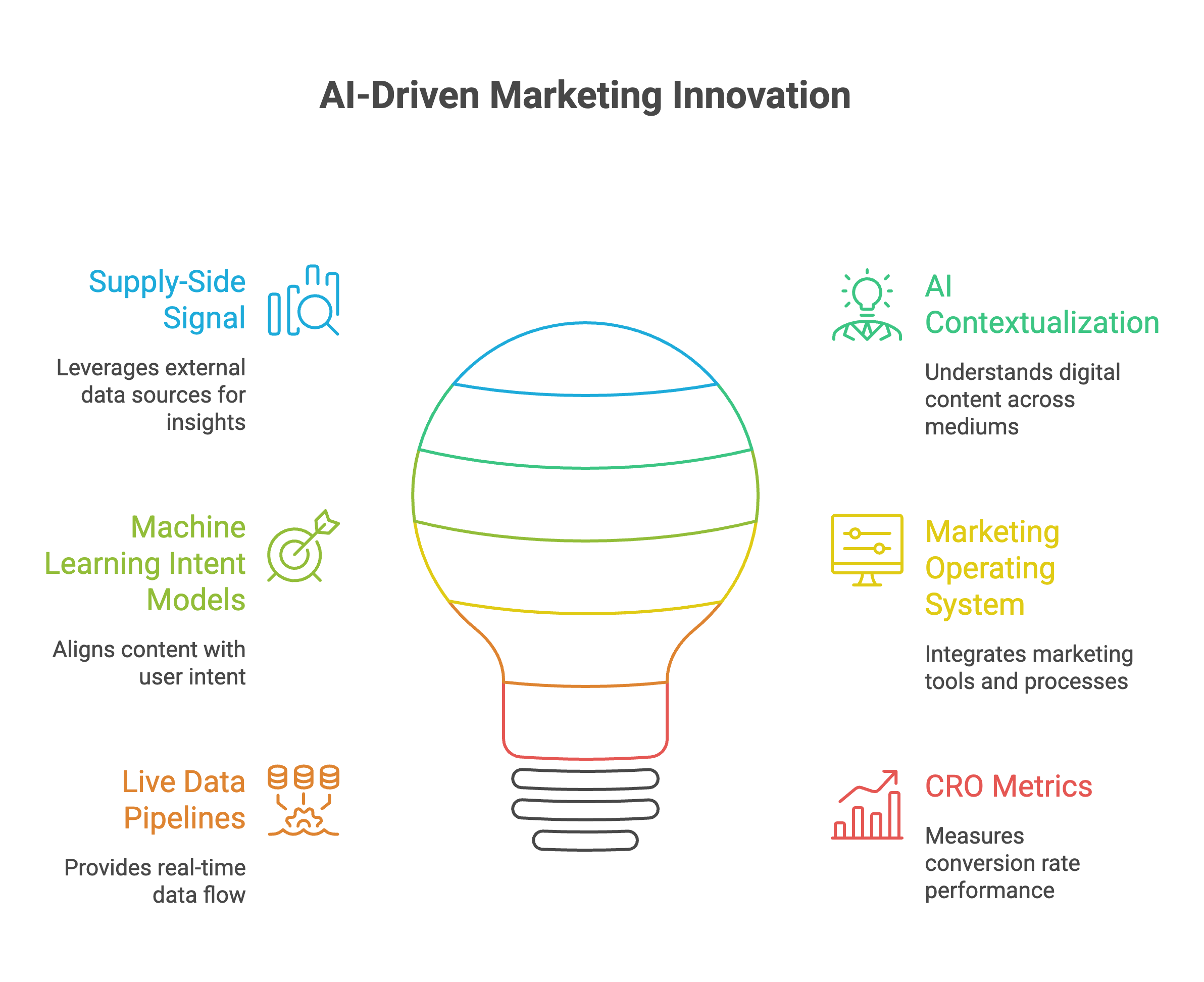
The innovation now, which I am proud to be at the forefront of, is leaning on the extra signal from the supply side, to deploy AI contextualisation at scale in containers to really understand digital content across all mediums (text, audio, video), and align it to machine learning intent models (first party website intent, second party and third party intent from the likes of Bombora), deployed as a marketing operating system, creating live data pipelines via DealIDs, which output CRO level metrics not marketing fluff. This direction of innovation has so much opportunity for B2B marketers to really eek out value from data driven advertising
All of this is a very long way removed from the humble 2017 DealID that we referenced at the start of this newsletter
What most B2B marketers actually do (and why it’s costing them)
I’ve analysed a lot of B2B programmatic stacks over fifteen years, trying to find nuggets of gold that can be brought into how my team operates. The pattern is depressingly consistent.
Pattern one: open auction default. The agency or in-house team sets up a DSP campaign with a third-party data segment, runs it through open auction, and reports back on impressions delivered. No deal IDs in the campaign at all. Performance is mediocre, fees are stacked, supply path is a black box. The marketer doesn’t know what they bought because the report doesn’t tell them.
Pattern two: generic publisher PMPs. The team has been pitched a handful of “premium B2B publisher PMPs” by an agency or a sales rep, signs them off, and runs spend through them. The PMPs are real (Forbes, Bloomberg, the Financial Times) but the audience targeting underneath is just open auction with a publisher whitelist. Better than pattern one, but you’re still not pre-resolving audience; you’re just buying premium environments. That beats a lot of B2B activity that I have seen, especially in tier 2 self-serve DSPs, where the inventory is unbelievably bad - but it still under-sells what can be done when it is done right
Pattern three: bolt-on curated data. The team has heard about curation, has signed up for one or two Audigent or Multilocal deals, but hasn’t reorganised the campaign architecture around them. The curated deals run alongside open-auction buys, with no clean comparison data, no shift in budget allocation, no measurement framework that isolates curated performance. The result is a hedged bet that doesn’t prove anything.
Pattern four (rare): curated-first architecture. The team has restructured their B2B programmatic activation around curated deal IDs as the primary delivery mechanism, with open auction as a fallback for scale rather than a default. They know which curators they’re working with, what audience signals are underneath each deal, what the fee structure looks like, and how to optimise dynamically. This is the version that actually performs, and it’s the architecture that the next two years of B2B programmatic will reward.
If you’re in pattern one or two, you’re not getting what your budget could deliver. If you’re in pattern three, you have the components but not the architecture. The shift to pattern four isn’t expensive, but it does require knowing which questions to ask.
The five questions to ask about any B2B deal ID
These are the questions I ask when auditing a B2B programmatic stack. They will surface most of the issues that matter, fast.
1. What is the audience source, and how is it resolved? Is this a third-party intent segment loaded into an SSP, a first-party CRM match, a deterministic firmographic graph, or a probabilistic lookalike? “B2B audience” is not an answer. You should be able to name the data partner, describe the matching methodology, and see a sample of the resolved audience size. If your curator can’t tell you this, the audience is probably weaker than the deal ID suggests.
2. What is the supply path, and how many hops are in it? From bid request to ad render, how many intermediaries does this impression flow through? Each hop is a fee and a potential failure point. A clean curated deal should be advertiser, DSP, SSP, publisher. If there are resellers or aggregators in the chain, ask why.
3. What is the actual fee structure, broken down by layer? Media cost, DSP fee, data fee, curator fee, SSP fee, third-party verification fee. If the answer is a single percentage (”our take is twenty percent”) you don’t have fee transparency, you have a fee summary. The Strategus framework on the five layers of programmatic cost is the right benchmark; if your partner can’t disclose against it, that’s a finding.
4. Is it auditable at log level? Can you get raw bid logs, win logs, and the metadata that ties impressions back to specific deal IDs? Without log-level access, all your reporting is the DSP’s interpretation of the DSP’s data. The 2017 ANA programmatic study found 15% of advertiser spend was unattributable across the supply chain. That problem hasn’t fully gone away.
5. Can the deal be paused, modified, or optimised dynamically? Some deal IDs are static (PG deals committed to volume, PMPs with fixed parameters). Curated deals should let you adjust audience composition, change frequency caps, swap creative, and shift budget without renegotiating the underlying terms. If you can’t, you’ve signed up for a buy, not a programmatic activation.
If you ask these five questions and your agency, your in-house team, or your platform vendor can’t answer them in plain language, you have a stack problem. Not a budget problem.
Where this is heading
Two near-term shifts are worth watching.
Curated deal IDs are absorbing the data-marketplace model. The traditional DSP data marketplace (where buyers shop third-party segments and pay a CPM uplift) is being structurally disrupted by sell-side curation, because the same data activated through a curated deal ID is cheaper, cleaner, and more auditable than the same data activated through a DSP segment overlay. Expect the data-marketplace model to compress over the next eighteen to twenty-four months, with first-party and curated activation taking share.
B2B-specific curators are an emerging category. Most curation today is generalist (Audigent, Multilocal, Lotame). The next layer is specialist B2B curation: deal IDs built specifically for ABM motions, with firmographic depth and intent overlays designed for long sales cycles. This is where the real margin will be in B2B programmatic over the next three years, because the operational sophistication required is high enough to be defensible.
The deal ID itself will get richer. Sell-side curation is pushing more logic into the deal ID: dynamic audience refresh, bid-level optimisation, brand suitability validation, frequency capping at the account level rather than the cookie level. The deal ID of 2027 will carry more configuration than the deal ID of 2024, and the marketers who treat deal IDs as configurable activation tokens (rather than static inventory packages) will get the lift.
The takeaway
A deal ID is not a premium publisher access pass. It is the configurable activation token for everything that makes B2B programmatic work in 2026: audience precision, supply-chain accountability, fee transparency, and outcome optimisation. If you’re running B2B programmatic without understanding the deal ID architecture underneath your spend, you’re operating without the most important diagnostic tool in the stack.
The good news: this is fixable in weeks, not quarters. The five questions above will surface most of what’s broken in a typical B2B programmatic activation. Asking them is the cheapest, fastest way to upgrade your program before any other change.
Next in this series: programmatic curation explained for B2B, the deeper version of why sell-side targeting has structurally changed what your DSP buys are actually doing.
The B2B Stack is written by Mike Harty, founder of FunnelFuel, a B2B-native programmatic managed service operating across London, New York and Singapore. If you’re auditing your own deal ID architecture and want a second pair of eyes, reply to this email and we can compare notes.