From Data Rich to Revenue Ready: Why Speed Is the New Advantage in B2B Growth
It’s not about more leads — it’s about moving from buyer intent → engagement → outcome faster than your competitor. Here’s how to do that
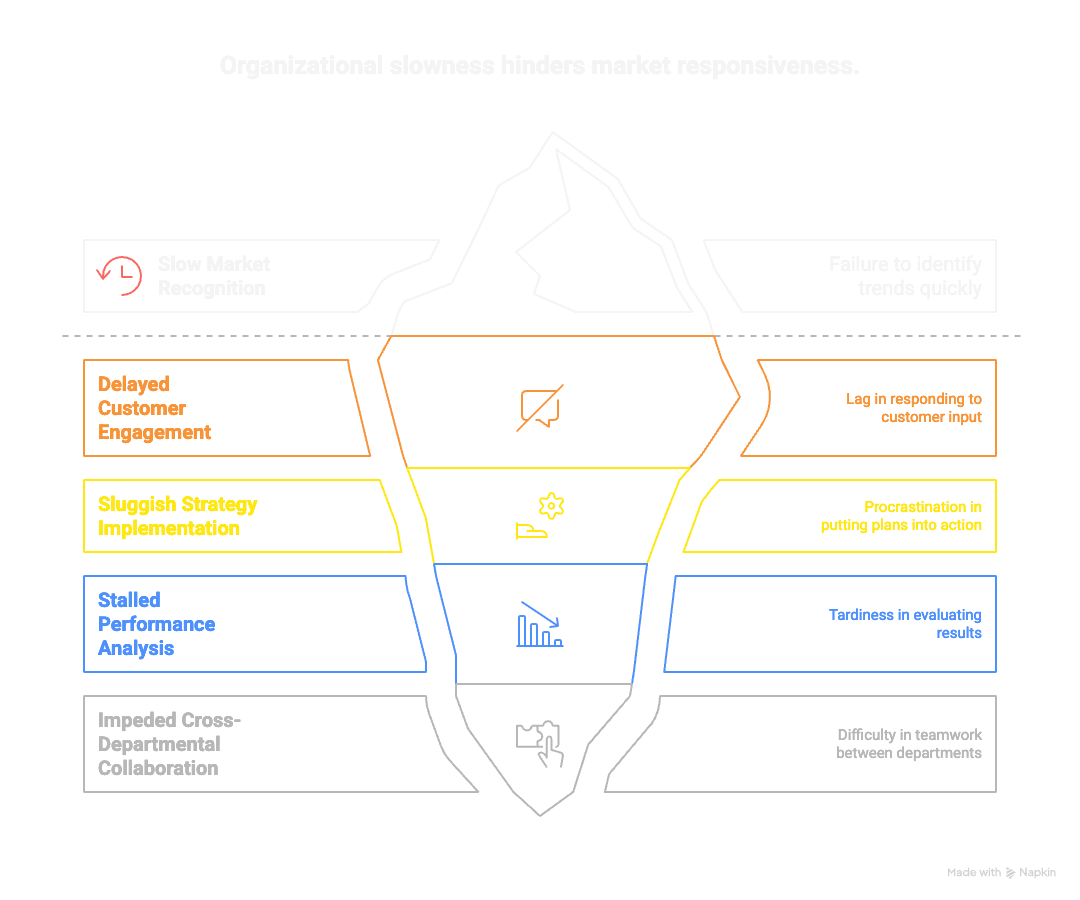
B2B teams aren’t losing because they’re data-poor. They’re losing because they’re slow.
Slow to identify buying groups.
Slow to activate signals.
Slow to orchestrate media.
Slow to measure.
Slow to align internally.
And in 2026, slow is no longer a workflow inconvenience — it is your largest, most invisible source of pipeline loss.
The industry is finally naming the problem out loud.
The Shift: Speed Is the New Moat
For the last decade, the B2B mantra was simple:
“More tools, more data, more signals.”
And it worked… until it didn’t.
The martech stack ballooned.
Identity expanded.
Intent exploded.
Signals multiplied.
But one thing never changed:
The time it takes most teams to act.
Meanwhile, buyers have become faster, noisier, and harder to correlate.
The buying group is fluid.
The journey is non-linear.
Anonymous sessions hide real intent spikes.
The Dark Signal Layer: Capturing What DSPs Miss
If you’re buying media in The Trade Desk or DV360, you’re playing on infrastructure built for ,selling toothpaste and clothes. Adtech was never built for the enterprise B2B buyer, but with some clever implementation and adaption, the worlds leading DSPs’ can work for B2B buyers.
Dark social and programmatic impressions move faster than dashboards.
This is the new reality:
Data is no longer the competitive advantage.
Speed is.
Teams win not because they know more but because they reduce the time from:
Signal → Activation → Pipeline → Revenue.
That velocity is the real moat.
And the market has just proved it.
The Wake-Up Call: This Week’s Marketing Week Bombshell
Marketing Week published one of the most honest B2B autopsies of the year:
“B2B pressure leads marketers to sacrifice quality in favour of quantity.”
(https://www.marketingweek.com/b2b-pressure-leads-quantity/)
Their findings are damning:
56% of B2B marketers are forced into volume over quality
46% say speed is the #1 barrier to doing great work
Teams are stuck in “always-on execution mode”
Quality drops because workflow bottlenecks dominate
Strategic thinking evaporates when systems can’t move fast enough
But the real insight — which the article implies but doesn’t say outright — is this:
Marketers default to quantity because their systems cannot activate quality signals fast enough.
When identity is fragmented, data is stale, signals are siloed, campaigns take weeks, approvals take longer…
the only lever left is busywork.
The article is devastating not because it’s negative —
but because it’s true.
Slow systems create bad marketing.
Fast systems create strategic marketing.
Authority Check: Every Analyst & Vendor Is Saying the Same Thing
This isn’t just a Marketing Week problem.
It’s the industry’s problem.
And every influential source is converging on the same conclusion:
IDC
IDC reports that teams who activate intent data within 48 hours generate 2.3× more pipeline than slower teams.
Forrester
Forrester’s Buying Group Revolution highlights that buying groups are now 8–20 people, fluid across channels, and require real-time orchestration — not static lists.
LinkedIn + Edelman
Their “Hidden Buyers” research shows that up to 65% of influence happens outside visible channels — requiring faster identity, intent and media alignment.
MadisonLogic
Their research on buying-group personas reveals 8 distinct roles in complex B2B deals — each producing different, time-sensitive signals.
Anteriad + Ascend2
Data-confident marketers are 3× more likely to drive revenue — not because of the data itself, but because confidence increases the speed of action.
DemandGen Report
82% of B2B organisations say “speed to engagement” is now the #1 predictor of pipeline conversion.
AdExchanger / MarTech / The Drum
Analysts agree the adtech ecosystem is shifting toward:
curated supply
identity-led bidding
signal-based sequencing
and AI-assisted activation
All of which reward speed, not volume.
The story is consistent across every credible publisher:
The winners in 2026 won’t be the most data-rich.
They’ll be the fastest to act on the data.
Why B2B Is Slow: The Bottlenecks No One Fixes
Speed isn’t only a cultural problem.
It’s an architectural one.
Here are the hidden structural blockers slowing your GTM engine:
1. Identity Fragmentation
Identity is fragmented across:
CRM
MAP
website analytics
ad platforms
enrichment tools
ABM suites
programmatic logs
The result:
Your brightest signals enter dark rooms.
This alone creates days of friction.
The New B2B Account Graph: A Product Perspective on Targeting in 2025
The concept of the “Account Graph” is quietly becoming the most valuable infrastructure in B2B marketing. It’s the connective tissue that decides whether your Target Account List (TAL) becomes a signal engine - or just another spreadsheet collecting dust. As the identifiers behind the companies you target fragment, our product playbook has to change if …
2. Signal Silos
Intent → analytics → CRM → MAP → outreach → DSP → SDR
= six layers of bottlenecks.
Signals degrade with time.
Every hour counts.
Most systems take days.
3. Tool Sprawl
The average B2B martech stack contains 19–37 tools (DigitalBloom, 2025).
Every handoff slows velocity.
More tools = less speed.
4. Activation Lag
Signals are often detected today…
activated next week…
and measured next quarter.
By then, your buyer has:
read competitor content
spoken to sales
surged on social
hit other websites
taken a demo elsewhere
Slow activation = invisible churn.
5. Workflow Debt
Most GTM workflows were built between 2015–2020 —
optimised for lead gen, not buying groups.
Today’s buyers need real-time, multi-layer activation.
Legacy workflows can’t deliver it.
6. Measurement Blind Spots
Teams move slowly because:
they can’t measure the right signals
attribution is delayed
pipelines aren’t connected
buying groups aren’t resolved
If you can’t see the truth fast, you can’t act fast.
Introducing The Signal Spine — The Architecture of GTM Speed
This is the operating system that today’s ABM suites, DSPs and CRMs do not provide natively.
The Signal Spine is the backbone that finally connects:
identity
intent
behavioural signals
programmatic exposure
media activation
sales engagement
and measurement
into a single velocity engine.
Layer 1 — Identity Resolution
Account → Buying Group → Persona → Session → Device
Speed is impossible without identity clarity.
Layer 2 — Behavioural Intelligence
High Value Actions (HVAs)
Recency models
Page intent classification
Session pathways
Buying-group heatmaps
This is the heartbeat of modern ABM.
Layer 3 — Intent Fusion Layer
Topic intent
Competitor intent
Search intent
Contextual consumption
Programmatic impressions
Category surge
Recency/decay scoring
Intent is useless if not fused and ranked.
Layer 4 — Programmatic Signal Layer
Open-web media intelligence:
impressions → matches → frequency → exposure logs → creative influence
This layer reveals buying-group movements before CRM ever sees them.
Layer 5 — Activation Orchestration
Workflows that launch within hours:
LinkedIn
programmatic
outbound
nurturing
sales alerts
personalised content
cross-account triggers
This is the layer legacy ABM tools struggle with the most.
Layer 6 — Measurement & Feedback
A 24–48 hour loop, not quarterly post-mortems.
This is where revenue teams discover velocity — or lose it.
Real Examples: Slow vs Fast GTM
Slow Team
Intent surge detected Monday.
CRM updated Wednesday.
SDR alerted Friday.
Programmatic launched Tuesday.
Deal lost Wednesday — buyer had already engaged with a competitor.
Fast Team
Intent surge detected Monday.
Identity resolved instantly.
DSP + LinkedIn + outbound activated within hours.
Sales engaged same day.
Deal won.
It wasn’t better content.
It was better speed.
The 2026 Playbook: Becoming a Speed-First GTM Org
Here’s the part the market reports can’t give you.
1. Build Your Signal Spine First
Not more tools — more architecture.
2. Reduce Time-to-Activation
Move from intent → activation in hours, not days.
3. Align Media + Sales
Programmatic warms buying groups.
Sales closes them.
Orchestration = speed.
4. Install Speed KPIs
Time-to-signal
Time-to-activation
Time-to-engagement
Time-to-pipeline
Buying-group velocity
Signal decay curves
5. Kill Tools That Add Drag
If it slows activation, it dies.
Founder Reflection
This week’s Marketing Week stat hit hard:
“46% of B2B marketers say speed is their #1 barrier to doing great work.”
I’ve seen the same thing every day.
The biggest wins in my own systems didn’t come from more data —
they came from removing drag.
One architectural shift.
One identity spine.
One activation layer.
And suddenly pipeline accelerates.
It took me a decade to realise something so simple:
B2B doesn’t have a data problem.
It has a speed problem.
And the fastest team wins.
💬 What to Ask GPT Next
A new idea of mine, some prompt guidance to help you continue exploring this further
“Using the B2B stack Signal Spine model, design a GTM architecture that reduces our time-to-activation by 70%.”
“Audit our ABM stack and identify where we’re defaulting to quantity because of slow activation.”
“Build a 90-day speed-acceleration plan using the KPIs in this post.”
“Map our current buying-group signals and identify the fastest activation paths.”
“Create a workflow that activates programmatic + LinkedIn + outbound within 2 hours of an intent surge.”


Brilliant articulation of the velocity gap in modern B2B. Your Signal Spine framework crystallizes something I've observed repeatedly: the most sophisticated intent data loses value exponentially with each hour of delay. What stood out is how you connected workflow debt to architectural constraint rather than just operational inefficiency. The real nuance here is that buying groups moving across dark social and anonymous sessions create a fundamentla mismatch with legacy martech built for linear attribution. One consideration: as teams compress time-to-activation, there's a risk of optimizing for speed at the expense of signal quality verification, especially when identity resolution confidence is below certain thresholds.
Thanks for sharing mike Hart 😊