

The infrastructure layer of B2B programmatic is being redrawn. This week we saw Publicis become the third holding-co to slam TradeDesk, movements across M&A, and convergence between data players, moats and walled gardens.
FreeWheel shipped agent infrastructure for CTV and declared itself a neutral rail for AI buyers and sellers. Smartly signed a letter of intent to acquire INCRMNTAL and moved measurement inside the execution layer. LinkedIn expanded its creator and CTV moat and quietly became a harder wall to climb over. Viant posted record earnings by leaning fully into autonomous AI campaign execution. The Trade Desk, meanwhile, is facing pressure from every direction — fee compression, agentic disintermediation, and a CEO who’s simultaneously right about AI and wrong about how fast the floor drops. This week Publicis publicaly told their clients to avoid TTD.
Five moves. One direction.
The platforms that control signal, execution, and measurement in a single loop - rather than as three separate vendor relationships - are separating from the rest of the market.
This is what that looks like in real time.
📩 Not subscribed yet? STACK SIGNALS lands in your inbox every Friday. — and never miss the week’s signal through the noise.
THE PATTERN - PROGRAMMATIC IS CHANGING RAPIDLY
For a decade, B2B programmatic ran on a three-layer stack. You bought data from one vendor. You activated through a DSP. You measured with a separate tool, usually quarterly, usually after the damage was done.
That model is being compressed into a single continuous loop - and AI agents are the mechanism doing the compressing. All of the major traditional layers of programmatic, most notably the Demand Side Platform, are under immense pressure. In my 15+ years in the space, this is unprecedented. The darling of independent adtech, once on a one way upward journey, is getting systematically attacked across the agency landscape
What’s accelerating this: the emergence of MCP (Model Context Protocol) as a shared language between AI systems and advertising infrastructure. Every major platform move this week — FreeWheel, Viant, even LinkedIn’s CAPI integration — is a play for position inside that loop.
The question for every B2B marketing team isn’t whether this happens.
It’s whether you’re building toward owning signal inside the loop, or renting access to someone else’s.
🔴 THIS WEEKS MAJOR STORY BREAKDOWN
TradeDesk: Three Holdcos in One Month — The Trade Desk Isn’t Losing an Audit. It’s Losing a War.
What happened:
In an email sent to select clients and obtained by Adweek, Publicis explained that The Trade Desk had failed a third-party audit conducted by FirmDecisions — a specialist media contract compliance auditor — that evaluated the platform’s fee structures and media and data spend. Adweek The audit found that TTD improperly applied its DSP fee to other fees it charged Publicis and some of its clients, billed clients for tools they were automatically opted into without evidence of authorisation, and did not provide the auditor with information necessary to validate that media and data costs were invoiced at cost and without mark-up. Adweek This follows Dentsu and WPP, who quietly stepped back from TTD’s OpenPath supply initiative weeks earlier over what they described as hidden fees, transparency concerns, and lack of clarity on where ads ran. Campaign Live Three of the Big Five holdcos. One month. All citing transparency.
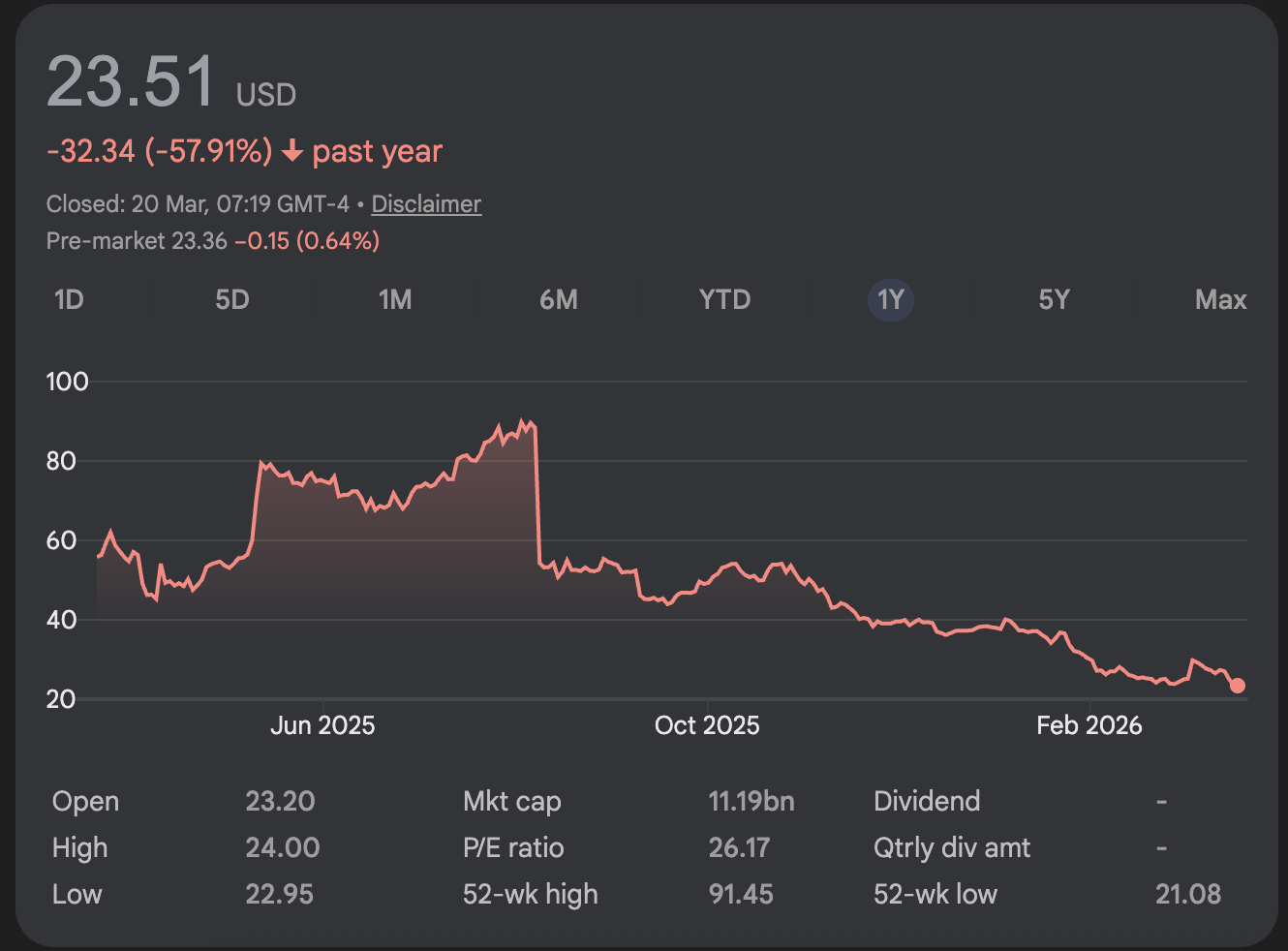
The Trade Desk stock has retreated 33% in 2026. Campaign Live The CEO responded by personally buying $148 million of shares. The board lost a member. Rosenblatt and Stifel both downgraded the stock.
The official version — and why it’s only half the story:
Take the audit findings at face value for a moment. Fee complexity, auto-enrollment in tools, audit access refused. That’s a real problem and TTD’s own fee structure, transparent in principle, confusing in practice, has made it harder on itself. It has been slow — and I’d argue stubborn even — in response to legitimate concerns about the Kokai interface. Personally I never liked the withdrawal away from a programmatic traders interface and the force manoeuvre of putting new features into Kokai only. Worst then that, clients face more bureaucracy than they should when trying to access their own data. Adweek Those are genuine operational failures. Worth fixing. Worth holding TTD accountable for.
But they don’t explain the pattern.
Three holdcos. Same month. Same language. Same framing.
That’s not three separate audits arriving at the same conclusion independently.
That’s a coordinated moment.
My read: this is a territory war, not a billing dispute
Here’s the structural reality that nobody is saying loudly enough.
The Trade Desk spent years building the buy-side’s most powerful independent platform — and then made a strategic decision to move into the supply chain. This is becoming table stakes, and the programmatic ecosystem of Supply Side Platforms representing publishers (SSP’s), and Demand Side Platforms (DSP’s) representing media buyers is dead. This was a significant line of discussion that I had with adtech titans in New York during the first week of March. Both sides have converged into a singular access layer, and their competition is now less themselves, as truley alterntive ways of buying media, driven by AI protocols.
Thus, OpenPath wasn’t just a transparency initiative. It was designed to make ads perform better and help buyers directly purchase publishers’ inventory — a viable alternative to Google’s infrastructure. Adweek That sounds great for advertisers. And maybe it is.
But here’s what OpenPath actually does to the holdco trading desk model: it removes the agency’s supply-path optimisation layer from the equation. SPO is one of the services agency trading desks charge for — and earn margin on. OpenPath, positioned as “at cost,” directly threatens that revenue line. Agencies have spent years accepting lower takes and making their margin opaquely out of media deals, and curation has opened up a route to making margin from the supply layers. This very much links to our discussions about Principal Media, and the billion dollar agency revenue game that comes with it
Industry observers pointed to potential overlap between OpenPath and services traditionally handled by agency trading desks, including supply-path optimisation and inventory curation. e4m When WPP cited “overlap with agency services” as a concern about OpenPath, they weren’t confused about what OpenPath does.
They were telling TTD to get out of their lane.
The Publicis audit, real as its findings may be, arrived at exactly the right commercial moment to give the holdcos a legitimising narrative for what is fundamentally a power move. You can’t tell your clients “we’re stepping back from TTD because it competes with our trading desk margin.” But you absolutely can tell them “we failed an independent audit and we have a responsibility to protect your media spend.”
Same outcome. Much cleaner story.
The irony that the industry isn’t saying:
The loudest voices calling out TTD on transparency are the same organisations currently facing their own transparency crisis.
The world’s largest agencies essentially pitch for free and operate on razor-thin disclosed margins. To survive, they have to generate profit from hidden fees and undisclosed arrangements. Adweek WPP is currently facing a $100 million whistleblower lawsuit alleging nearly $1 billion annually in undisclosed principal trading income — with 97.4% of GroupM’s proprietary inventory allegedly unused by its own largest clients. The same week they exited OpenPath over “transparency concerns.”
That is not a small irony.
It’s the defining contradiction of the current holdco moment.
What TTD’s actual problem is:
Strip out the agency politics and TTD still has a real structural challenge — one that exists regardless of who’s auditing them.
Unlike Google, Amazon, and Meta, which benefit from inventory ownership and closed-loop measurement systems, The Trade Desk sits entirely on the buy side. That independence is the product. But that same structure means TTD has no captive inventory to fall back on if clients walk. 24/7 Wall St. Publicis accounts for more than 10% of TTD’s gross billings. Two ad holding companies would each account for over 10% of 2025 gross billings — combined, 30%. Investing.com A DSP built entirely on the buy side, with no inventory ownership, dependent on holdco relationships for 30% of gross billings, now facing fee pressure from agentic systems that automate what human traders used to do manually — that’s a structural pressure stack, not a billing dispute.
Jeff Green’s $148 million personal share purchase says he believes the platform wins long-term. He’s probably right about the thesis. The question is whether he’s right about the timeline.
The supply-side signal worth tracking - where is all this ad spend going?
The deeper shift underneath this story — and one that barely got coverage — is where the smart money is actually moving.
As TTD gets squeezed from the buy side, the supply side is having a very different week. Curation platforms, deal marketplaces, and SSP-layer infrastructure are gaining traction precisely because they offer what OpenPath promised but without the conflict of interest: transparent supply paths, brand-safe inventory packaging, and signal-rich deal IDs that don’t require the buyer to route through a DSP’s proprietary pipe. They also offer post auction discounts, which equate to revenue lines for agencies
The agencies exiting OpenPath aren’t abandoning supply-path thinking. They’re building their own. Publicis has Epsilon. WPP has its own data infrastructure. They want the supply advantage TTD was building — they just want to own it themselves.
This is the curation layer becoming contested territory. And it confirms something we’ve believed at FunnelFuel for a while: the value in B2B programmatic isn’t at the DSP execution layer. It’s in proprietary signal, curated supply, and the intelligence layer that sits between audience data and inventory — the part that’s genuinely hard to replicate and impossible to audit away.
Your takeaway:
Stop reading this as a story about TTD’s billing practices.
Read it as a story about who controls the supply chain in a post-OpenRTB world — and why every major player is willing to pick a very public fight to answer that question.
The holdcos want the supply advantage back. TTD wants to disintermediate the holdcos. Neither side is being fully honest about why.
The B2B buyers in the middle should be asking a different question entirely: if my DSP and my agency are fighting over who controls the path to inventory, what does that mean for the quality, transparency, and cost of the media I’m actually buying?
The answer is: more than you think. Not for the first time, it is why you need expertise on your side. Simply reply to this email, it goes straight to my inbox, and we will bring you up to speed on what we’re doing at FunnelFuel to aid B2B buyers in navigating this complex world
Sources: Adweek — Publicis leaked memo and FirmDecisions audit reporting,
17 March 2026 AdAge — Publicis no longer recommends TTD,
17 March 2026 Adweek — Dentsu and WPP OpenPath exit,
February 2026 Campaign US — TTD/holdco fallout TL;DR,
March 2026 Adweek — The Trade Desk-Publicis Fight Is Really a War Against Transparency,
March 2026 24/7 Wall St. — TTD two-day selloff and CEO share purchase reporting
Investing.com — Rosenblatt and Stifel downgrades
STORY 2: FreeWheel ships an MCP server — the agent infrastructure race is live
What happened: FreeWheel launched AI agent infrastructure for CTV this week — an MCP server that lets agency AI systems plug directly into FreeWheel’s platform, with built-in intelligence tools that monitor deal performance and trigger optimisation without human input. PMG signed on for the pilot.
Why it matters: This is the first time a major sell-side platform has shipped agent infrastructure as a product, not a prototype. At CES, NBCU, FreeWheel, and Newton ran a live experiment showing AI agents planning and optimising a campaign by communicating directly over MCP. This week, that architecture became commercially available.
The infrastructure question underneath this: who becomes the connective tissue between AI agents and inventory? FreeWheel is betting the answer is “neutral SSP-layer infrastructure.” The platform that controls that endpoint controls the pricing relationship — not the agency, not the brand.
This captured my attention because it points to the post programmatic competition that I outlined above as the real competitors against the likes of TradeDesk.
My view: There’s a standards war running in parallel. AdCP ((backed by Scope3 and Brian O’Kelly - BOK is an adtech godfather and Scope3 has real credibility within adtech circles as a result), PubMatic, Yahoo, Triton, and others)) is building an agent-native protocol from the ground up — the OpenRTB of the agentic era. ARTF is a rival framework. Messy coexistence for 18–24 months is the likely outcome, then convergence. Don’t pick a side yet. Do ask your agency what their MCP integration strategy is — because within two years, their AI agent will be making deal decisions on your budget without asking.
STORY 3: Smartly acquires INCRMNTAL — measurement is being absorbed into execution
What happened: Smartly signed a letter of intent to acquire INCRMNTAL, a Tel Aviv-founded incrementality measurement startup that measures causal lift without user-level tracking and without pausing campaigns. The deal closes within weeks.
Why it matters: INCRMNTAL does something the industry has talked about for years but rarely operationalised: always-on, causal measurement that doesn’t require a controlled experiment. No holdouts. No paused campaigns. No quarterly retrospective. It analyses natural variation in campaign activity to calculate true incremental impact across every channel — CTV, DOOH, audio, social, display.
Smartly’s existing platform processes hundreds of billions of creative assets annually. Pulling real-time measurement inside that execution engine means the feedback loop between “what ran” and “what worked” shrinks from weeks to hours.
My view: This is bigger than one acquisition. It’s a signal that measurement is leaving the strategy deck and entering the activation layer permanently. This will be a huge component of agenctic buying. For B2B teams with 60–90 day sales cycles and attribution models that barely hold together, this points to where the industry is heading: incrementality as a live signal inside campaign execution, not a post-mortem you run once a quarter and file somewhere. Start asking your measurement vendor how they plan to survive when the DSP does this natively.
STORY 4: LinkedIn becomes a full-stack B2B media platform — and the walls just got higher
What happened: LinkedIn announced Premium Creator Sponsorships with Top Voices 360 this week — brands can now secure exclusive editorial shows via BrandLink, extend into co-branded posts, industry events, and content integrations, all inside Campaign Manager. CTV placements are now purchasable through Campaign Manager directly or programmatically via The Trade Desk.
Why it matters: Look at what LinkedIn has assembled in 12 months: verified professional targeting, Thought Leader Ads (company-boosted personal content which talks to the gold rush around B2B influencer marketing), CAPI/Qualified Lead Optimisation for first-party CRM signal integration, CTV distribution, and now a creator commerce layer with direct payments to Top Voices via Stripe.
That’s not a social platform making incremental improvements. That’s a walled garden being constructed specifically around the B2B buyer journey — from awareness through creator content, mid-funnel through account-level retargeting and intent signals, conversion through lead gen forms, and now living-room presence through CTV.
My View: LinkedIn is going after the entire GTM funnel and it’s winning. The platform holds something the open web cannot replicate: verified professional identity at scale. They claim ~1.3B users. 82% of B2B marketers using influencer campaigns on the platform now say they’re essential to ROI. The risk isn’t that LinkedIn doesn’t work. It’s that it works well enough that you stop building signal outside it — and then you’re entirely dependent on a platform that owns your audience data and can change pricing at will.
Let that last line sink in - apathy here could cost B2B vendors big time in the future.
The B2B teams that win long-term are the ones running LinkedIn hard and building owned signal infrastructure in parallel. Not instead. In parallel.
LinkedIn is very strong at reaching some personas and surprisingly weak in reaching others. No matter how much the chatter may suggest otherwise, LinkedIn is not B2B in its entirety.
💡 Want the tactical breakdown? This week’s deep dive: The Dark Funnel Playbook — how to build pipeline from accounts that never fill in a form, click an ad, or raise a hand.
🔴 STORY 5: Viant posts record earnings — this is what “open internet, done right” looks like
What happened: Viant Technology (Nasdaq: DSP) reported record Q4 and full-year 2025 results this week. CTV accounted for 46% of total advertiser spend in Q4 — a record. The headline from CEO Tim Vanderhook: the launch of Outcomes, described as a fully autonomous AI decisioning solution built specifically for the open internet.
Why it matters: Two DSPs. Two very different stories. The Trade Desk guided soft last month and got punished — stock down 16%, questions about structural headwinds across open-web programmatic. Viant hit record numbers and investors were pleased. The divergence isn’t about company size or market share.
It’s about positioning.
Viant leaned fully into autonomous AI execution and CTV-first, first-party addressability. TTD has been more measured — rightly articulating the long-term AI opportunity but defending ground that’s under pressure in the short term. Markets reward narratives that match the moment.
My view: The open internet isn’t dying, and despite all doom mongering to the contrary, it is still growing. It’s also bifurcating. Platforms executing banner campaigns at impression scale with legacy optimisation logic: margin-compressed, commoditised, losing budget share. Platforms running outcome-based, agent-optimised, CTV-anchored programs with proprietary addressability: growing. Viant’s result is proof the second category is real. For B2B buyers, this means the DSP conversation in 2026 isn’t “which platform has the best UI.” It’s “which platform has its own signal layer and can run autonomous optimisation against my actual business outcomes.”
🔴 STORY 6: The Google AdX ruling still hasn’t landed — and the silence is its own signal
What happened: Nothing. That’s the story. Judge Brinkema’s structural remedy ruling — the decision that will determine whether AdX gets divested or Google escapes with behavioural requirements — was expected before the end of 2025. It’s now March 2026 and the market is still waiting. European regulators are holding parallel proceedings pending her decision.
Why it matters: Divestiture of AdX looks increasingly unlikely based on the judge’s line of questioning during November’s closing arguments. What’s more probable: behavioural remedies that include Unified Pricing Rules reform, DFP interoperability with Prebid, and data-sharing with publishers. Meaningful on paper. Less disruptive in practice than the industry hoped.
But here’s what the delay confirms: Google’s structural hold on the open web’s premium publisher supply — AdSense placements, small publishers who’ve never heard of programmatic — isn’t going anywhere fast. For B2B buyers targeting niche professional content, that supply remains uniquely valuable and uniquely concentrated.
My View: Wider access to YouTube and wider access to the incredibly valuable niche B2B publishers using adsense, are the two reasons that I am following this - the third is morbid curiosity.
My general view? Stop waiting for the ruling to change your supply strategy. The curation layer is the answer regardless of what Brinkema decides. Deal-based buying through curated supply paths — where you can control brand safety, signal quality, and transparency without depending on Google’s infrastructure — is the right strategic direction for B2B programmatic in 2026 whether AdX gets broken up or not. Build your supply relationships like the ruling changes nothing. Because it probably won’t change enough.
🧠 ZOOM OUT: What this week actually tells us
Shift 1: The execution layer and measurement layer are merging — permanently. Smartly/INCRMNTAL is one data point. Viant’s Outcomes autonomous decisioning is another. FreeWheel’s agent infrastructure is a third. The three-vendor stack — data, activation, measurement — is being replaced by a single continuous loop. This has been theorised for years. This week it started shipping as product.
Shift 2: Every platform is building a proprietary moat around signal — and making it harder to leave. LinkedIn’s creator layer. FreeWheel’s MCP endpoint. Viant’s first-party addressability suite and outcomes based billings. They are all doing the same thing: capturing signal closer to the buyer and making that signal non-portable. The open ecosystem remains the scale layer. Proprietary signal ownership is the margin layer.
Shift 3: The agent rail will be owned by whoever ships the infrastructure first. AdCP vs ARTF is a surface-level standards fight. The real contest underneath it is for who becomes the connection between AI agents and inventory — permanently. That’s an infrastructure position worth decades of margin advantage. The platforms moving now have the same window the early SSPs had when header bidding launched. That window closes faster than people expect.
⚙️ WHAT SMART B2B TEAMS SHOULD DO MONDAY
Stop treating measurement as a separate workstream from activation. It’s being absorbed. Get ahead of it by demanding real-time incrementality reporting from your current vendors now — before your DSP does it natively and you lose visibility into how the numbers are being calculated.
This is exactly why, when I started FunnelFuel I began with B2B analytics. Measurement and activation need to live in one data warehouse so they can fuel each other. That was evident 3 years ago.
Start asking your agency what their MCP strategy is. Not as a technical question. As a commercial one. If their AI agents are making autonomous deal decisions on your budget, you need to know who they’re accountable to.
Audit your LinkedIn dependency and build outside the walls in parallel. The platform is exceptional. It’s also becoming more expensive and more closed by the month, with ambitions which could tread on toes. Own your audience development alongside it.
Watch Viant’s Outcomes product. If autonomous AI campaign execution delivers at scale in H1 2026, the conversation about managed services in B2B programmatic changes fast.
Pressure-test your supply chain assumptions before the Google ruling lands. Build curation-first supply relationships now. Whatever Brinkema decides, the open web premium supply question doesn’t resolve cleanly.
📬 FROM THE B2B STACK — IN CASE YOU MISSED IT
🔗 The Dirty Secret of B2B Intent Data Intent data is now table stakes in almost every B2B stack. But most teams are buying the same signals, from the same sources, pointed at the same accounts — and wondering why pipeline isn’t moving. This piece unpacks why third-party intent has become a commodity, what the signal actually tells you versus what vendors claim it tells you, and what the teams generating real pipeline are doing differently. If your ABM motion is built on Bombora alone, this one is required reading before your next stack review. →
The Dirty Secret of B2B Intent Data: Everyone Has It, Almost Nobody Uses It Right
There’s a moment I’ve witnessed inside dozens of B2B teams across my career.
⏭️ COMING NEXT WEEK: The Dark Funnel Playbook — A look at the channels your web analytics will never see. Why trying to measure them is the wrong approach, but equally how you can leverage dark signals to win in an increasingly pitch black world
Subscribe below to get it in your inbox the moment it drops on Tuesday.
If STACK SIGNALS helped you see this week differently — that’s the point.
Every Friday, we pull the signals out of the noise and tell you what they actually mean for B2B pipeline, media strategy, and the platforms you’re betting on. No recaps. No “here are five trends.” Just the implication layer — written by someone who’s been operating in programmatic for 15 years and has seen most of these cycles play out before.
And if you’re rethinking how signals turn into pipeline — that’s exactly what we’re building at FunnelFuel. Reply to this email or email mike [at] funnelfuel.io and I’ll point you in the right direction to learn more
📚 SOURCES THIS WEEK
AdTechRadar — FreeWheel MCP server / AI agent infrastructure launch, March 2026 AdExchanger — MCP universal adapter explainer; Smartly/INCRMNTAL acquisition reporting Mobile Marketing Reads — Smartly/INCRMNTAL deal detail, March 2026 Global Dating Insights / LinkedIn official — Top Voices 360 / CTV expansion announcement, 19 March 2026 Viant Technology SEC filing (Nasdaq: DSP) — Q4 and FY 2025 earnings, 11 March 2026 Digiday — Ad Tech Briefing: Industry rethinking foundations, March 2026 AdExchanger — 2025: The Year Google Lost In Court And Won Anyway, January 2026 Digiday — Google AdX closing arguments and remedies reporting ADOTAT — The Agentic Advertising Survival Guide for 2026, February 2026 Marketing Dive — AdCP launch and agentic programmatic standards